Standards for All | October 19, 2026
The aroma of a freshly-cooked meal fills the room as conversations begin. Someone is laughing across the table. Another member is asking about a recent doctor’s appointment. Someone attending for the first time is beginning to feel comfortable, while another person shares a small victory from their week. The room is already alive long before any formal program starts.There is no microphone, no presentation, and no rush to begin. Instead, there is something far more meaningful taking shape: a community where people feel comfortable enough to simply be themselves.
These moments happen every week at Shepherd Wellness Community, where I serve as the Coordinator of Programs and Volunteers. Before reading PANO’s Values to Action Roadmap, I viewed these interactions as an important part of creating a welcoming environment. After reading it, I realized they represent something much deeper. They are examples of values, voice, and belonging in action.
Like many nonprofit professionals, I often think about the quality of the programs we deliver. Was there member impact? Did we accomplish our goals? Did we stay organized? Those questions are important, but the Roadmap challenged me to ask a different question: How do people feel when they engage with our organization?
That shift in perspective resonated deeply with me.
Shepherd Wellness Community exists to improve the wellness of people living with HIV through a holistic approach that recognizes health is about much more than medical care. Wellness includes emotional support, healthy meals, education, meaningful relationships, opportunities to learn, and having a place where people know they belong. Our mission has always reflected those values, but the Roadmap reminded me that belonging is not something we simply hope happens, it is something we intentionally create through our words, our actions, and the culture we cultivate every day.
One of the reflection questions asks whether leaders truly see, value, and empower each person’s humanity. That question stayed with me long after I finished reading. In my role, leadership often looks less like directing people and more like listening. It means noticing when someone has been unusually quiet. It means remembering details from previous conversations. It means recognizing that every person who walks through our doors brings a unique story, and our responsibility is to create a space where that story is met with dignity rather than judgment.
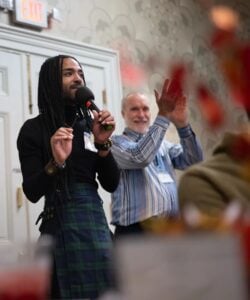
Photo by Stephanie Strasburg/Pittsburgh’s Public Source
My own journey into nonprofit leadership has reinforced that lesson. Before working in community health, I spent years teaching fashion design to young people and building creative spaces where expression and confidence could flourish. Whether I was encouraging a student to trust their creative voice or now supporting someone on their wellness journey, the principle has remained the same: people thrive when they know they are valued. Programs may look different, but belonging has always been the foundation.
The Roadmap also reinforced that community voice should not be treated as an occasional survey or suggestion box. It should influence how organizations make decisions. While Shepherd Wellness Community already creates opportunities for participants to share their experiences, reading the Roadmap encouraged me to think about how we can become even more intentional about inviting feedback into program planning and volunteer engagement. The people closest to our mission should help shape how that mission comes to life.
Throughout my nonprofit career, I have learned that trust cannot be manufactured. It is built over time through consistency, authenticity, and genuine care. People rarely remember every topic discussed during a program, but they always remember how they were treated. When people feel respected, heard, and welcomed, they are more likely to participate, connect with others, and invest in the community around them.
Reading the Values to Action Roadmap affirmed something I have come to believe throughout my career: our greatest resource is not our budget, our building, or even our programs. Our greatest resources are the people we serve and the relationships we build with them. Policies and procedures provide structure, but people create culture. When our daily actions consistently reflect our organizational values, trust grows naturally.
Moving forward, I hope to strengthen opportunities for member feedback, continue welcoming volunteers who understand the importance of creating supportive spaces, and intentionally place belonging at the center of program planning. These are not dramatic changes; they are meaningful ones. They remind me that excellence in the nonprofit sector is measured not only by what we accomplish, but by how people are impacted and experience our work.
The Values to Action Roadmap gave me language for something I have witnessed throughout my career: nonprofits are at their strongest when they move beyond providing services and become places where people genuinely feel seen, valued, and connected. At Shepherd Wellness Community, that is not simply good practice, it is the heart of our mission.
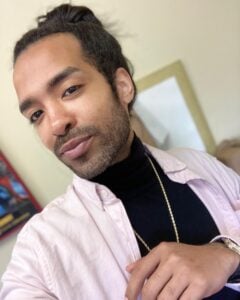 Born and raised in Harlem, New York City, Daequan Andino is a multidisciplinary fashion artist, creative director, educator, and founder of AYMEDICI, an experimental fashion and wearable art brand established in 2007. His work merges fashion, fine art, and storytelling to create immersive experiences that encourage conversation and challenge conventional ideas of design. For more than a decade, Andino has taught fashion design to young people ages 8–18, empowering the next generation of creatives through education and artistic exploration. He is also the founder and editor-in-chief of AYME Magazine, an independent publication celebrating fashion, art, culture, and emerging creative voices. Now based in Pittsburgh, Pennsylvania, Andino continues to expand his artistic practice through wearable art, editorial publishing, exhibitions, and community-centered creative initiatives that explore the intersection of fashion, art, and storytelling.
This post is part of our series looking at the Standards for All Report and Values to Action Roadmap released earlier this year. Here are links to the other posts in the series so far:
Category
Related Posts
Need some nonprofit help?
Become a PANO member today.