Register Now for the 2026 Collaborative Conference!
Theme: Rooting Deeper, Rising Together • When: Thursday, 9/24, & Friday, 9/25 • Where: State College, PA
Standards for All | September 17, 2026
The moment one definitely commits oneself, then Providence moves too. All sorts of things occur to help one that would never otherwise have occurred…which no man could have dreamed would come his way.
-W.H. Murray, The Scottish Himalayan Expedition
We often think organizational change follows a different path than our personal lives. Individually – often in therapy – we make our dreams a reality through nonlinear processes –one tiny decision revealing the next. In contrast, nonprofits clutch their strategic plans like precious strings of pearls – those “best practice maps” designed to move groups of people through predetermined steps to pre-set strategies.
At PANO, our Standards For All work did not come from carefully plotted action steps. It was birthed from internal systemic and cultural shifts that need ongoing nurturing and room for growth. Like therapy, systemic change requires ongoing discussion to inform collective decision-making. Daily nonprofit work is often messy and uneven because it is human work.
As PANO’s executive leader, I’ve learned that systemic, cultural change requires ongoing organizational storytelling – engaging around what has been done, identifying the future of the work, and then determining the conditions needed for the next step. Rather than circling around the same issues, storytelling brings people along to help inform the next action.
PANO’s racial justice journey started in 2017 when our board couldn’t agree to issue a statement after the Unite The Right rally in Charlottesville. As PANO’s staff leader, I failed to speak up when our board president at the time – the only leader of color – facilitated one of the most difficult conversations ever to occur in our board room. So no, racial justice* was not always part of PANO’s DNA.
In November 2020, after years of hard conversations, the board formally adopted racial justice into our core structure and beliefs.* We definitely committed ourselves. As a licensed provider of the Pennsylvania Standards for Excellence Program, we further committed to a gentle, firm interrogation of the Standards: Are these best practices? And for whom are they best?
Once committed, unexpected opportunities came our way:
PANO initially identified the following systemic issues that we hoped would be addressed:
Following our cohort engagement, results included
Our work in the area of racial justice continues to unfold at a time when trust in public institutions has rapidly deteriorated and safety nets we once thought of as permanent are at risk. Executive orders, federal law, and regulations are negating the humanity of communities: immigrants, people who identify as LGBTQI, people with differing abilities, those who are socio-economically disadvantaged, and so many more. The long-standing need for systemic, cultural change could not be clearer – at every level.
Because systems change is nonlinear, each commitment we make brings the next step into focus. Grounded in the Standards For All tools and concepts, we are asking: What might be possible if
Our Standards for Excellence Program is building more equity into the program itself: providing greater access to the materials, making Standards Accreditation more community-based and attainable.
Our Member Engagement is shifting from “PANO as a Hub” to “PANO as a Connector.” Yes, we have some expertise to share with nonprofits. And nonprofits are often the experts we turn to for many issues. Why not connect the excellence offered by one to the excellence of others?
Our engagement with Pennsylvania’s broader nonprofit community includes a Community Action Summit on November 10, 2026, which will provide space to dream about the world we want to live in next (vs. the world we lived in even just a few years ago), and then identify needed conditions (e.g., legal structures, community structures, new ways of operating for nonprofits) to make that future a reality.
In just three days, registration closes for our 2026 Collaborative Conference, where you can connect with your peers and explore systems change in community. Together, we can build a world we have always needed. When we make that commitment, who knows what manner of opportunities will come our way?
* PANO has intentionally adopted racial justice rather than terms like “social justice” because we and others continue to be uncomfortable discussing the racial inequity that has plagued our own other organizations.
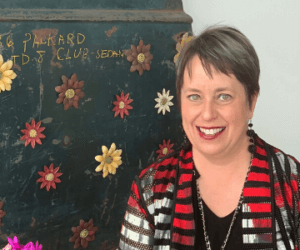 Since starting as PANO’s Executive Director in late 2013, Anne Gingerich has grown the PANO’s programming and presence in the Commonwealth – offering training, consulting services, and Help Desk (askPANO) support to address all things needed for strong nonprofit governance and management. She has further deepened nonprofit advocacy engagement by linking arms with other statewide advocacy organizations and the National Council of Nonprofits. With the support of PANO’s lobbyist, PANO has become a known name at the state capitol, and by members of Pennsylvania’s congressional delegation.
This post is part of our series looking at the Standards For All Report and Values to Action Roadmap released earlier this year. Here are links to the other posts in the series so far:
Category
Related Posts
Need some nonprofit help?
Become a PANO member today.